What do people need when everything collapses?
Médecins Sans Frontières
About
For close to twenty years that meant humanitarian crises, in dozens of countries, mostly at the moment things stopped working. Now it means the quieter emergency: people and institutions whose ground is moving and who need to think clearly about where they actually stand.
IWhere this comes from
Close to twenty years in humanitarian management, much of it with Médecins Sans Frontières. Emergency response, management facilitation, leadership training, across dozens of countries, arriving where systems had already failed and people were improvising.
What I noticed, over and over, was not what I expected. The people who held together in compound chaos were rarely the ones with the best contingency plans or the strongest organisations behind them. They were the ones who had built something interior. A story about themselves that could absorb the shock without dissolving.
That observation followed me home: it was never about crisis at all, it was about what happens to anyone when the ground moves and the old map stops matching the territory.
The turnNobody trains for this, but extreme environments taught me something I did not have language for at the time: clarity under pressure is learnable, mostly a question of conditions. Slow down enough, get honest about where you actually stand, stop reaching for the answer before you have understood the question.
So I trained. ICF, EMCC, forest bathing, functional breathing, narrative practices, not to collect certifications but to turn instinct into a practice I could hold in front of another person, session after session, without improvising.
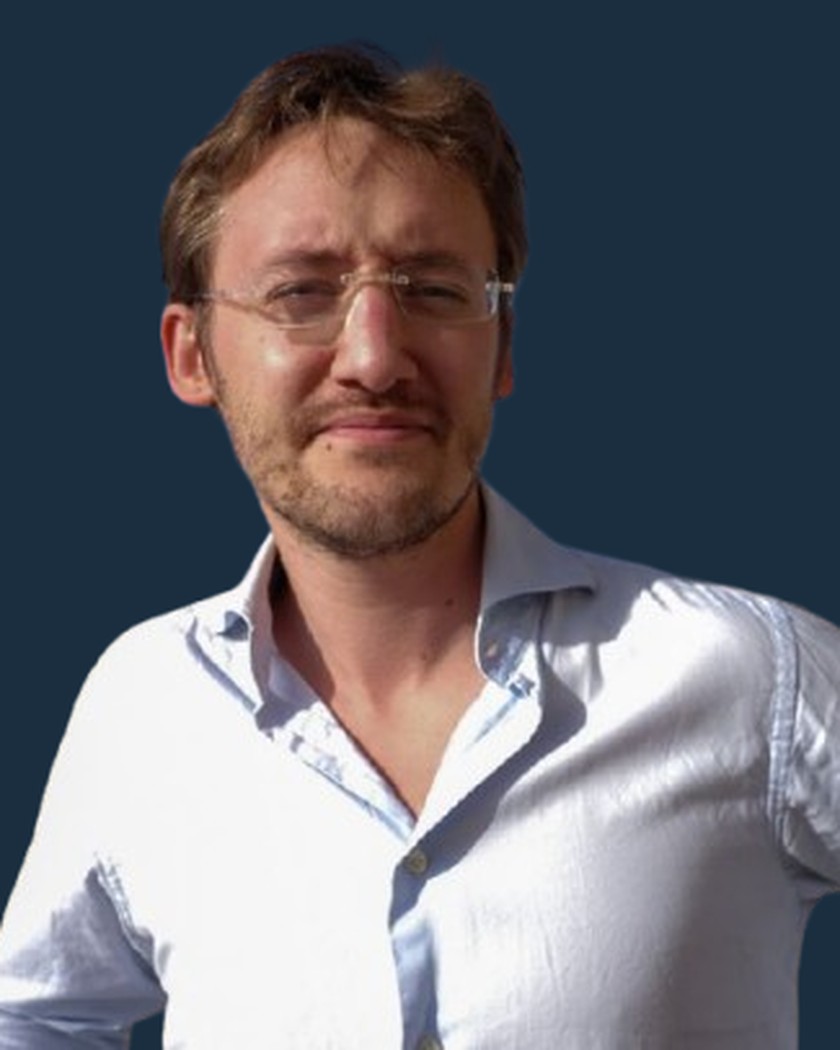
Based in northern Italy. Working in French, English, Spanish and Italian.
IITwo questions I could not let go of
What do people need when everything collapses?
Médecins Sans Frontières
What do institutions need when the world they were built for no longer exists?
European Climate Foundation
IIIBetween Stories
I needed a name for the space I kept meeting, in crisis zones and in coaching rooms and in my own life. Here is the one I use.
Between Stories is the gap between a story that has stopped holding and the one that has not taken shape yet. It is a state of transition, not a failure. It is uncomfortable, it is temporary, and it is where the clearest choices get made.
People arrive in that gap by different routes. A role that no longer fits. An organisation whose founding purpose has drifted from what the world now needs. The route matters less than the state.
The assumption I start from is simple. You are not lost. You are between stories. My job is not to hand you the next one. It is to create the conditions in which you can hear it.
IVHow I work
Deep listening is the operative principle. Not a technique I apply when the moment calls for it. It is how I engage at every scale, and it is the mechanism through which this work becomes possible at all. Being genuinely heard, rather than advised or analysed, is one of the rarest things we offer each other.
Coaching. Questions most people do not ask themselves, close listening to what is said and what is avoided. You find your own answers, because those are the only ones that hold.
Facilitation. Groups under pressure tend to solve the problem they can name rather than the one they have. The work is making the real conversation possible, then keeping it honest long enough to matter.
Organisational development. Diagnosis before prescription. Institutions between stories need an accurate read of where they actually are before they need a new strategy.
VTraining and credentials
Stated plainly, because these things should be checkable.
ICF Associate Certified Coach (ACC), International Coaching Federation
EMCC Practitioner, European Mentoring and Coaching Council
Certified forest bathing guide, nature-based practice
Functional breathing instructor, body-based practice
Close to 20 years in humanitarian management, largely with Médecins Sans Frontières
Lead OD consultant, NOD programme, European Climate Foundation
Four working languages, French, English, Spanish, Italian
150+ pro bono sessions delivered to humanitarian workers, an ongoing commitment
VITwo ways in
Twice a month, a five-minute read on the three accelerations and what they do to us. Free, and the easiest place to find out whether we think alike.
About the newsletter →Individually, or with your team and organisation. It starts with a free 30-minute call, no preparation needed.
Book a free call